By Ruslan Averin.
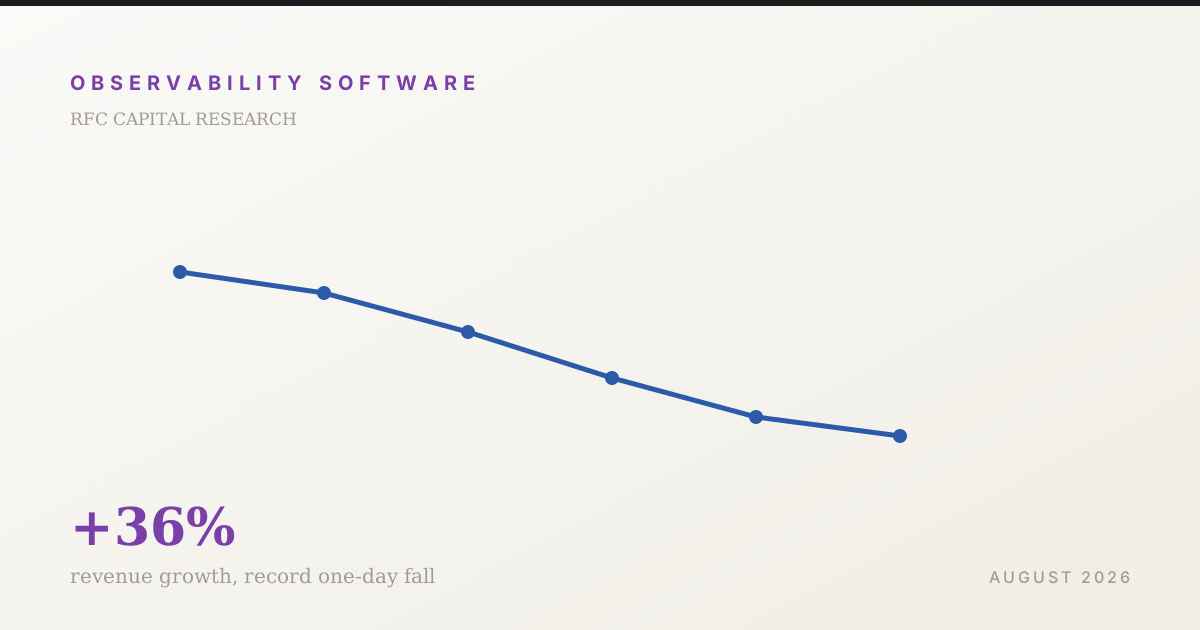
Datadog reported second-quarter revenue of $1.12 billion, up 36% year over year and ahead of a $1.08 billion consensus. Earnings per share of $0.65 beat the $0.58 expected. The company raised full-year 2026 guidance on both lines. The stock then fell between 17% and 21%, heading for its largest single-day decline on record.
The quarter
| Metric | Q2 2026 | Prior / consensus |
|---|---|---|
| Revenue | $1.12B | $1.08B consensus |
| Revenue growth | +36% y/y | — |
| EPS | $0.65 | $0.58 consensus |
| FY26 revenue guidance | $4.45–4.47B | raised from $4.30–4.34B |
| FY26 adjusted EPS guidance | $2.50–2.54 | raised from $2.36–2.44 |
The full-year revenue guide was lifted by roughly $150 million and the earnings guide by about 12 cents at the midpoint. These are not token revisions.
Why a beat-and-raise sold off
Three explanations were offered, and they are not equivalent.
The bar had moved above the print. Consensus is a published number; positioning is not. When a stock has run into a result, the price already reflects an expectation above the analyst figure. Clearing the published estimate while missing the unpublished one produces exactly this outcome.
Bookings decelerated. The most substantive of the three. Revenue is the recognised portion of contracts signed earlier; bookings are what was signed this quarter. Cooling bookings against accelerating revenue means the recognised line is still catching up to a demand environment that has already begun to soften. Bookings lead revenue, so the market prices the leading number.
Deceleration in the guided trajectory. The guidance was raised in absolute terms while implying a lower growth rate in the second half. For an asset priced on growth rate rather than on absolute revenue, a higher number at a lower rate is not straightforwardly good news.
What this says about software valuations
The episode is a marker for the sector rather than for one company.
Software businesses of this type carry valuations that embed years of sustained high growth. The multiple is not a judgement about this year's revenue; it is a judgement about the durability of the growth rate. Under those conditions, the sign of the revision matters less than the direction of the second derivative.
A 36% grower raising guidance would have been received very differently two years ago. It sold off now because the market has been actively looking for evidence of deceleration across the observability and monitoring category, and cooling bookings supplied it.
That search is itself the important context. When investors are hunting for a specific signal, ambiguous data resolves against the asset.
What to watch
Bookings and remaining performance obligations next quarter. The direct test of whether this quarter's cooling was timing or trend.
Net revenue retention. The metric that separates a demand problem from a competitive one. Falling retention with stable new business means customers are consuming less; stable retention with falling new business means the market is saturating.
Whether the raised full-year guide is itself raised again. A company that lifts guidance once and then holds it has confirmed the deceleration the market priced this week.
Conclusion
A 36% revenue beat with raised guidance produced a record decline, which tells you the price was never about the reported quarter. The market took cooling bookings as the leading indicator and repriced the growth durability assumption behind the multiple.
For the broader software complex, the read is that beating consensus no longer protects a valuation built on acceleration. The relevant bar is not the published estimate.
This is analysis, not investment advice.