By Ruslan Averin.
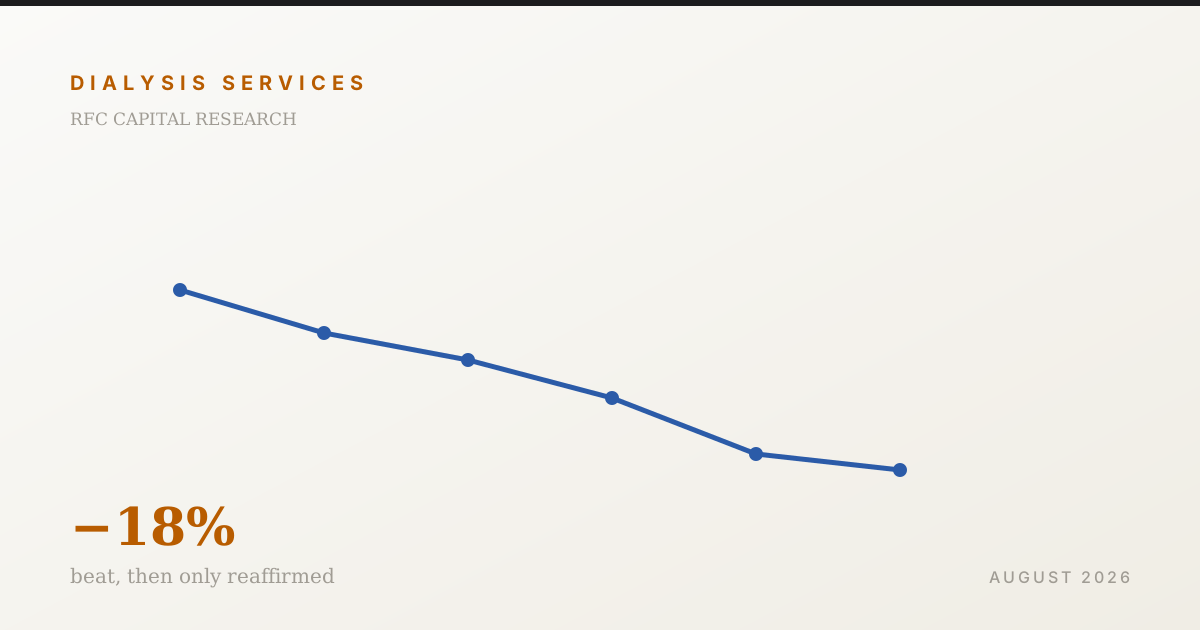
DaVita beat analyst estimates for the second quarter and fell nearly 18%. The decline was driven by three things that were not the headline number: declining revenue per treatment, rising patient care costs, and a decision by management to reaffirm rather than raise full-year guidance.
The mechanics of a dialysis business
This is a volume business with regulated pricing, and its economics reduce to a simple identity: profit per treatment multiplied by number of treatments.
Revenue per treatment is largely determined by payer mix. Commercial insurance reimburses at a substantial premium to government programmes, so a shift of even a few percentage points in mix moves the average materially — without any change in the number of patients treated.
Cost per treatment is dominated by clinical labour, and healthcare labour costs have been rising faster than reimbursement across the sector.
When the first line falls and the second rises simultaneously, margin compresses from both directions. That is the quarter DaVita reported, and it is why beating consensus on the aggregate figure did not protect the stock.
Reaffirming is a signal
The guidance decision deserves specific attention.
A company that beats in the second quarter and leaves its full-year outlook unchanged is communicating something precise: the outperformance is not expected to persist, or it will be offset later in the year. Reaffirming after a beat is arithmetically equivalent to lowering the implied second-half forecast.
Markets read this correctly and quickly. The beat was banked, the unchanged guide implied a weaker back half, and the two combined into an 18% decline.
This is a general pattern worth recognising. The relationship between a beat and the subsequent guidance revision carries more information than the beat itself. A raise equal to the beat means no change in outlook. A raise smaller than the beat means the outlook has been cut. No raise at all means it has been cut by the full amount of the beat.
What to watch
Commercial payer mix. The single most important variable in the model, and the one management has least control over. Mix deteriorates when patients move from employer coverage to government programmes, which happens with unemployment and with ageing.
Labour cost per treatment. Clinical staffing is the cost line that has proved most persistent across healthcare services. Contract labour usage is the early indicator.
Treatment volume growth. The offsetting lever. Volume growth can absorb margin compression for a period, and its absence removes the last defence.
Whether guidance is cut rather than reaffirmed next quarter. The progression from raise, to reaffirm, to cut is the standard sequence in a margin compression cycle, and this quarter was the middle step.
Conclusion
The headline beat was real and irrelevant. Falling revenue per treatment against rising cost per treatment is margin compression from both sides, and reaffirming guidance after a beat confirmed that management expects it to continue.
The transferable observation is about guidance grammar: in a business with regulated pricing and rising input costs, what management declines to raise tells you more than what it reports.
This is analysis, not investment advice.