By Ruslan Averin.
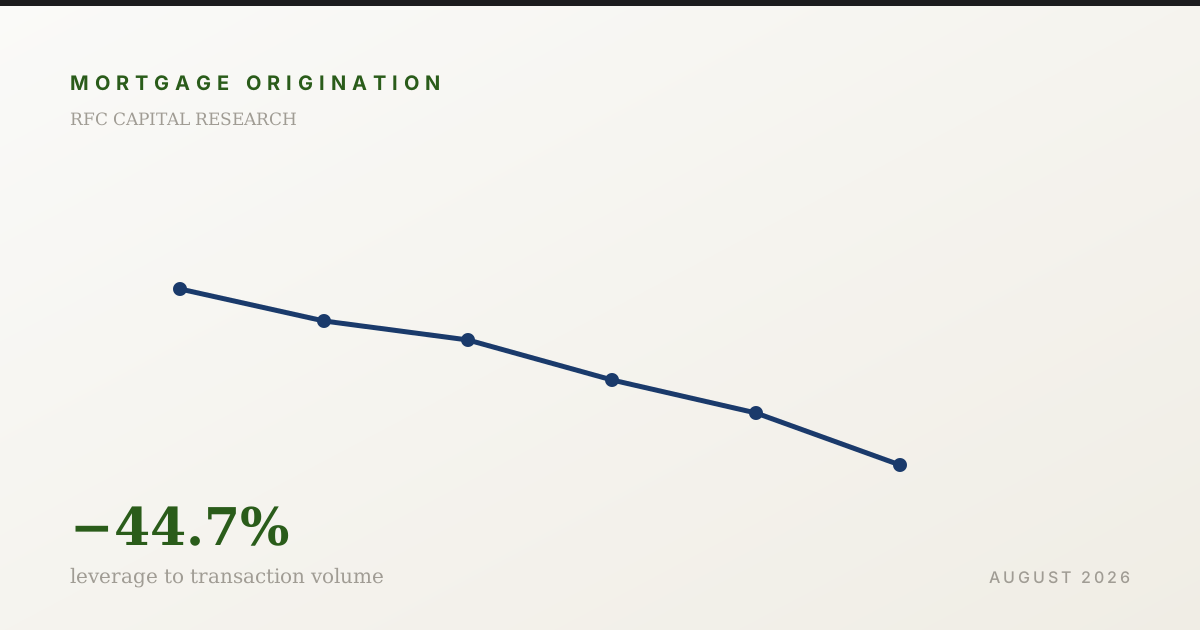
UWM Holdings fell 44.7% over the week to approximately $1.125. The company is a wholesale mortgage originator, and that business model is one of the most rate-sensitive structures available in listed equities.
What an originator actually earns
A mortgage originator makes money in two ways, and they behave very differently.
Gain on sale. The margin captured when a newly originated loan is sold into the secondary market. This scales directly with origination volume, and origination volume is a function of two things the company does not control: home purchase transactions and refinancing activity.
Mortgage servicing rights. The value of the right to service loans — collecting payments in exchange for a fee. This is the counterweight. Servicing rights gain value when rates rise, because higher rates mean fewer borrowers refinance and loans stay outstanding longer. They lose value when rates fall.
The two lines are therefore natural hedges. Falling rates increase origination volume and reduce servicing values; rising rates do the reverse.
Why the hedge is imperfect
The offset is partial, and the residual exposure is what produces moves of this size.
Origination volume responds to the level of rates relative to the existing stock of mortgages. When a large share of outstanding loans carries rates well below current market rates, there is no refinancing pool at all — homeowners will not refinance into a higher rate. In that environment, origination is limited to purchase transactions, and purchase transactions are limited by housing affordability.
That is a volume floor that no amount of competitive execution can lift. It also produces intense competition for the volume that does exist, which compresses gain-on-sale margins precisely when volumes are lowest.
Meanwhile servicing values, which should offset, are marked to modelled assumptions about prepayment speeds. They are an accounting cushion more than a cash one.
The leverage in the equity
A decline of 44.7% in a week in a company trading near a dollar reflects a further characteristic: originators carry substantial balance sheet leverage against loans held for sale, and equity below a low absolute price responds to changes in expected volume with amplified percentage moves.
At that price level the equity behaves less like a claim on earnings and more like an option on origination volume recovering. Options of that kind have wide outcomes in both directions.
What to watch
Origination volume against the prior quarter. The direct measure. Purchase and refinance splits should be examined separately, because only the refinance component responds to rates.
Gain-on-sale margin. The pricing environment. Compressing margins alongside flat volume indicates competition intensifying into a shrinking pool.
Servicing portfolio value and prepayment assumptions. The offsetting asset and the assumptions it rests on.
Liquidity and warehouse capacity. For a leveraged originator, financing availability is the constraint that matters before profitability does.
Conclusion
Wholesale mortgage origination is a leveraged position on transaction volume, and transaction volume is set by the relationship between current rates and the rates on the existing mortgage stock. Neither is within the company's control.
A 44.7% weekly decline is the amplitude of that exposure. The relevant forecasting question is not about the company; it is about the rate path and the refinancing pool it would create.
This is analysis, not investment advice.