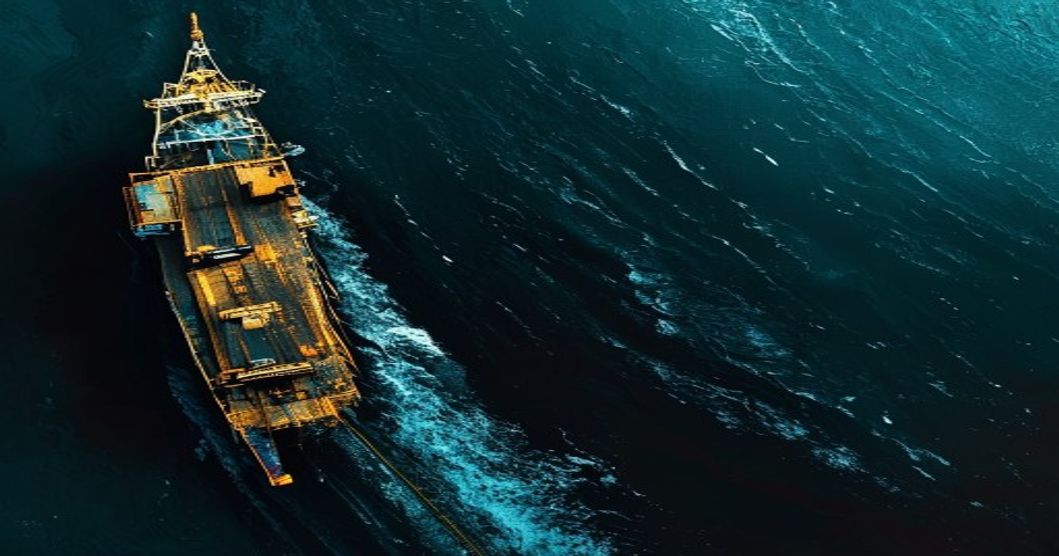
Some stocks go up when the world gets more dangerous. Crude tanker operators are the clearest example, and Frontline is the bellwether. Through the two-week US-Iran strike campaign, the tanker trade rallied on a simple premise: conflict around the Strait of Hormuz reroutes cargo, lengthens voyages, and drives freight rates higher. The weekend pause put that premise into reverse.
By Ruslan Averin.
This is Ruslan Averin's FRO stock analysis — here is how I read the unwind.
| Driver | Direction |
|---|---|
| Hormuz conflict risk | Falling on US-Iran pause |
| Crude tanker freight rates | Premium unwinding |
| Brent | -7%, back below $90 |
| Frontline sensitivity | High (rates + oil) |
| Recent volatility | -5.4% to $36.38 (July 9) |
Why tankers are a bet on fear
A tanker company earns on freight rates — the price of moving a barrel across an ocean. Those rates are unusually sensitive to geopolitics because conflict doesn't just threaten supply; it changes the map. When a chokepoint like Hormuz is at risk, cargo reroutes around it, voyages get longer, effective fleet capacity tightens, and day rates spike. That is why Frontline, an international shipping company focused on transporting crude oil and oil products, trades like a call option on maritime disruption. The volatility is real: the stock fell 5.4% to $36.38 in a single session on July 9, 2026, one of many sharp swings this cycle.
The unwind
The US suspended its strike campaign over the weekend and Tehran said its retaliation was over. With the immediate threat to Gulf shipping easing, the risk premium baked into freight rates has less reason to stay elevated — and the tanker trade gives back what fear handed it. Brent crashing about 7% back below $90 is the same event seen from the oil side. The names that rose on the premium fall on its removal.
How I read it
I treat tanker equities as a trade on a headline, not an investment in a business — the fundamentals of fleet supply and oil demand move slowly, but the freight-rate premium that drives the stock moves at the speed of the news cycle. That cuts both ways. This weekend it cut against the longs. The honest caveat is that a pause is not a peace: if Hormuz risk returns, rerouting resumes and the premium can rebuild as quickly as it unwound. Frontline is a leveraged way to be long global tension, and this week the tension eased.
Bottom line: the tanker trade rode the Hormuz premium up and hands it back on the US-Iran pause — a reminder that in shipping, the stock trades on fear, not on the ships.
Related analysis
- June 8 2026 Market Selloff: Ruslan Averin Breaks Down 12 Stocks in the Nasdaq's Worst Day Since April 2025
- Apple, Amazon and Netflix Closed Red on a Green Day — The Rotation Out of Megacap Isn't Over
- Every Oil Shock Since 1970 Ended the Same Way for Stocks — Paulsen's Warning for 2026
This is analysis, not investment advice.