By Ruslan Averin.
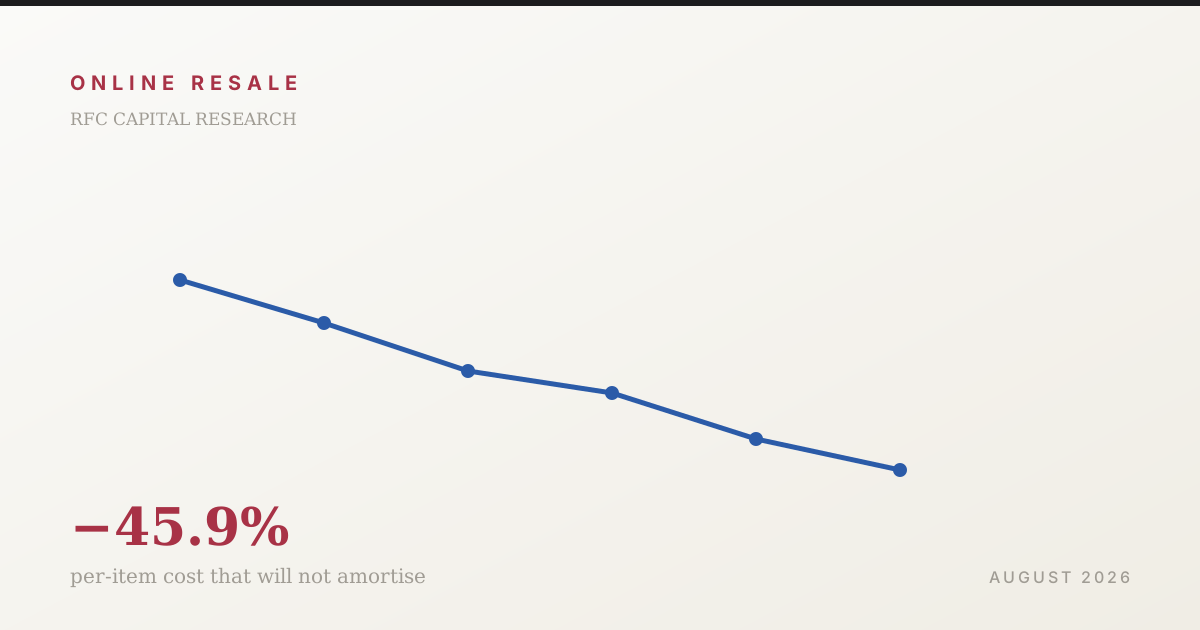
ThredUp fell 45.9% over the week to approximately $3.21, one of the largest declines among listed companies in the period. The business is online apparel resale, and its difficulties are structural rather than incidental.
Why resale is harder than it looks
The concept is straightforward and the operational reality is not. Every item entering the system is unique, and that single fact drives the entire cost structure.
Each item must be individually handled. Received, inspected, authenticated, graded for condition, photographed, described, priced and listed. In conventional retail these costs are incurred once per stock-keeping unit and amortised across thousands of identical units. In resale they are incurred once per item, and there is only ever one of that item.
Automation helps less than expected. Machine vision can assist with categorisation, but condition grading of used goods resists standardisation, and pricing a unique item requires judgement about a market of one.
Average selling prices are low. Secondhand apparel sells for a fraction of retail. Fixed per-item processing cost against a low average sale price compresses contribution margin from the start.
Returns are worse than in retail. A returned unique item must be re-processed rather than restocked.
The result is a business where gross margin percentages can look respectable while contribution per item after processing remains thin, and where scale adds volume without meaningfully reducing per-item cost. That is the opposite of the operating leverage a marketplace multiple assumes.
Why the market is unforgiving now
Small-capitalisation consumer companies with unproven unit economics are the most exposed part of the equity market to a shift in risk appetite. When capital is cheap, a path to profitability is a sufficient story. When it is not, the requirement becomes demonstrated profitability, and the gap between those two standards is where declines of this size occur.
Declines are also mechanically larger in these names. Thin trading liquidity means modest selling pressure moves the price disproportionately, and the absence of institutional support removes the natural buyer.
What determines whether the model works
Contribution margin per item after all processing costs. The single number that decides the business. If it is negative or marginal at scale, growth destroys value.
Processing cost per item over time. The trajectory is the entire operating leverage question. Flat processing cost with rising volume means no leverage exists.
Sell-through rate. Items that do not sell consume processing cost and generate no revenue. This is the hidden margin drain in every resale model.
Cash runway. For an unprofitable small-cap, the financing position determines whether the operating question ever gets answered.
Conclusion
A 45.9% weekly decline in a small-capitalisation consumer name reflects both company-specific concerns and the market's current unwillingness to fund unproven unit economics. The resale model has a genuine structural difficulty — per-item handling costs that do not amortise — and that difficulty does not diminish with growth.
The transferable observation is that marketplace multiples assume operating leverage. Where each transaction carries irreducible manual cost, the leverage does not arrive, and the multiple eventually corrects to reflect it.
This is analysis, not investment advice.