By Ruslan Averin.
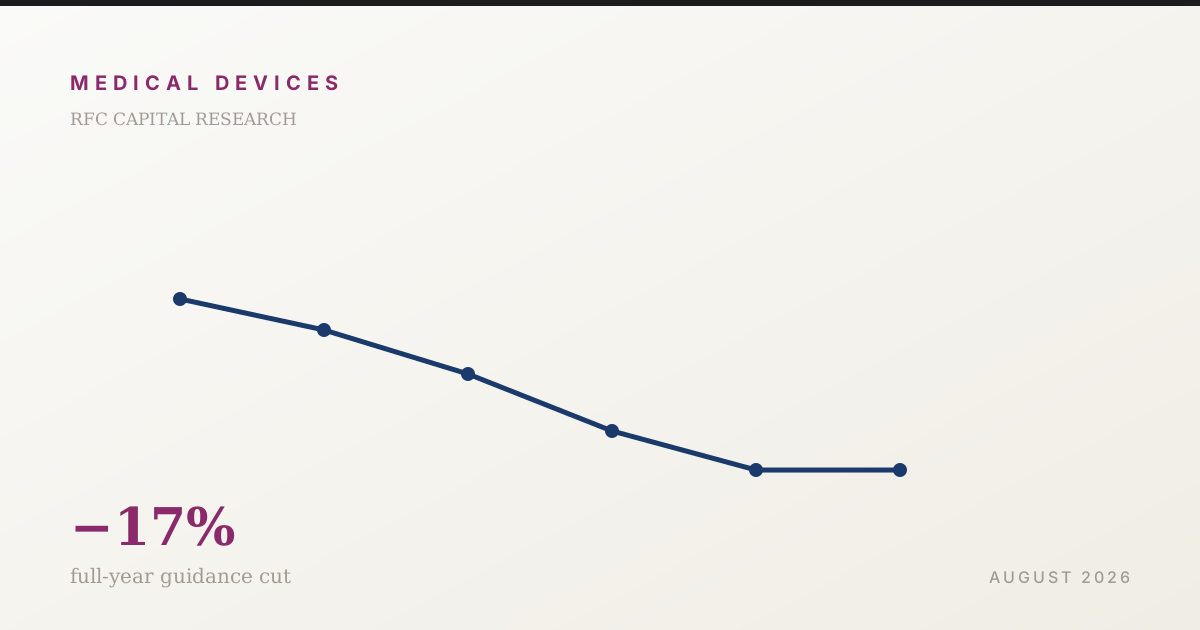
Insulet lowered its full-year 2026 revenue growth guidance and cut its United States outlook. The shares fell 17%.
A guidance cut in a high-growth medical device company is a materially different event from a missed quarter, and the distinction determines how it should be read.
Why a cut differs from a miss
A quarterly miss is backward-looking. It reports that something did not happen, and it can be attributed to timing, to a distributor order pattern, to a shipping week falling on the wrong side of a period end.
A guidance cut is forward-looking and discretionary. Management chose to revise its own forecast downward, having seen the current order book and the current competitive position. It is the strongest negative signal a company issues about itself, because it is the one statement that cannot be explained as noise.
Cutting the domestic outlook specifically narrows it further. This is not a currency effect or a single international market; it is the largest and most profitable geography.
What drives demand in this category
Insulet sells insulin delivery systems into a market defined by three forces.
Competitive intensity. Insulin pump and continuous glucose monitoring markets have consolidated around a small number of well-capitalised participants, and product cycles are short. A competitor launching an improved system takes share within quarters, because the switching decision is made by clinicians and patients rather than by long-term contracts.
Reimbursement. Coverage decisions determine the addressable population more than clinical merit does. A change in coverage policy alters demand faster than any product improvement.
The GLP-1 overhang. Weight-loss and metabolic drugs affect the trajectory of type 2 diabetes progression. The scale and timing of that effect on device demand is unresolved, and it has compressed multiples across the diabetes device category irrespective of reported results.
A US-specific guidance cut is consistent with any of the three, and the company's characterisation of which one matters more than the size of the cut.
What to watch
New patient starts versus existing patient revenue. Existing patients generate recurring consumable revenue and are sticky. New starts are where competition is decided. A cut driven by slowing new starts is a share problem; a cut driven by existing patient attrition is a much more serious one.
Gross margin through the cut. If revenue guidance falls while margin holds, the company is choosing not to buy volume with price. If margin falls too, it is competing on price and losing.
International trajectory. Whether the weakness is genuinely domestic or a leading indicator.
The next guidance action. A single cut can be conservatism. A second cut establishes that management does not have visibility, and the multiple compresses further on that basis rather than on the revenue itself.
Conclusion
A 17% decline on a guidance cut is a proportionate response to a company revising its own forward view downward in its core market. The number matters less than the cause, and the cause determines whether this is a competitive share loss, a reimbursement change, or the beginning of the structural effect the sector has been anticipating.
Growth medical device valuations rest on multi-year adoption curves. Any credible evidence that the curve is flatter than assumed compounds through the whole forecast.
This is analysis, not investment advice.