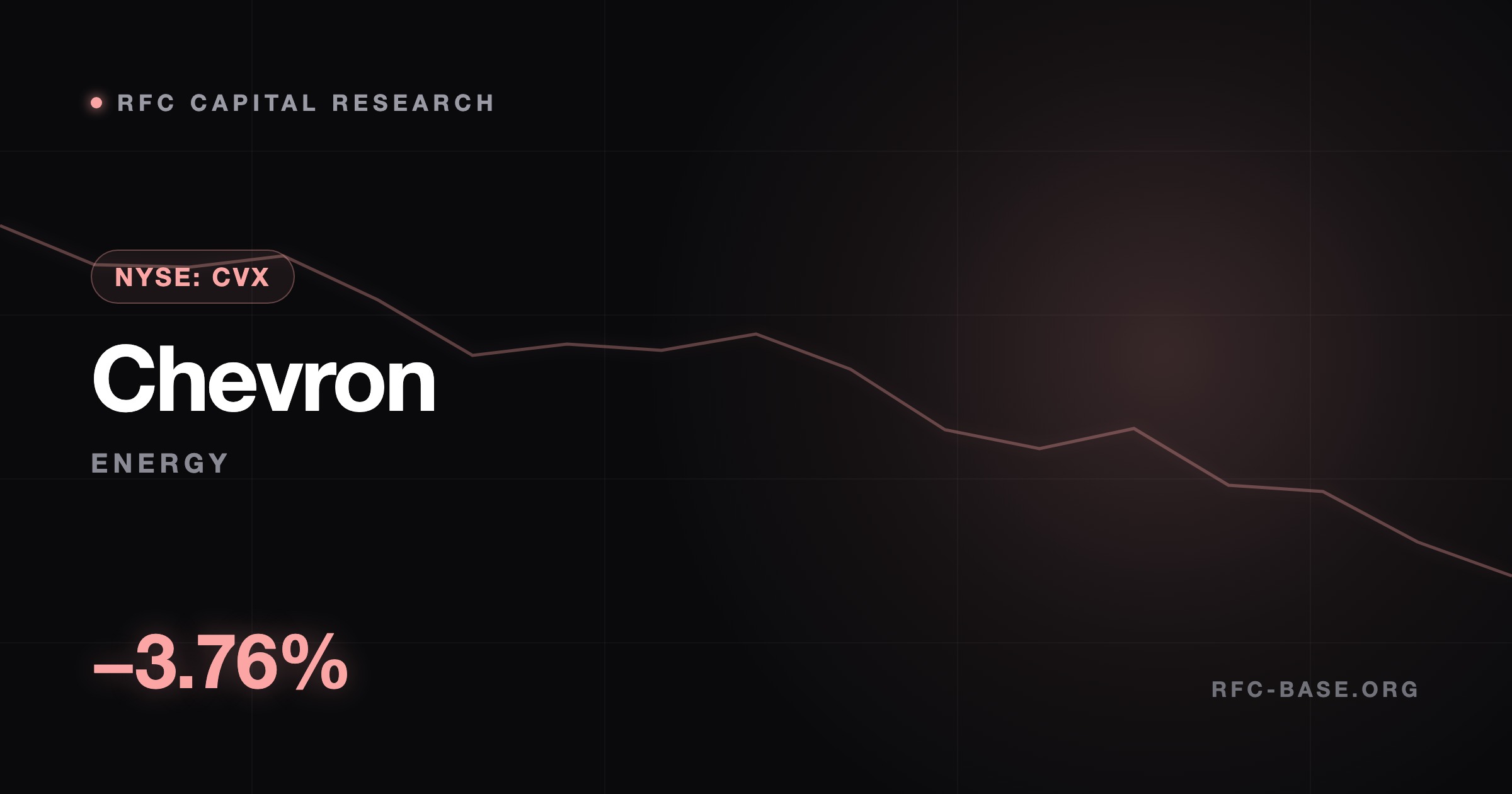
Chevron dropped 3.76% on June 15, 2026 — and dropped again — as crude sank on reports that a U.S.–Iran peace deal was nearing signing. With more direct oil leverage than most peers, CVX trades almost as a barometer for Hormuz risk, and that cut both ways this week.
By Ruslan Averin.
This is Ruslan Averin's NYSE:CVX stock analysis — a pure oil-leverage repricing into the Fed.
Why Chevron fell
The prospective deal is expected to reopen the Strait of Hormuz, the chokepoint that carries a large share of seaborne crude, and to lift the U.S. naval blockade. The market read that as supply coming back: WTI fell over 5%, and Brent followed. Chevron's heavy oil weighting meant it absorbed the move almost directly, sliding 3.76% on the session.
| Metric | Value |
|---|---|
| Daily change | −3.76% |
| WTI move | over −5% |
| Driver | Hormuz reopening, U.S.–Iran deal |
| Macro overhang | June 16–17 FOMC |
| Catalyst date | June 15, 2026 |
The macro layer
There was a second, quieter pressure: the June 16–17 FOMC sat right behind the oil headline. Markets priced near-certain odds of no rate change, so the Fed was a backdrop rather than the trigger — but it kept risk appetite cautious in rate-sensitive corners. For Chevron, though, the story was overwhelmingly the barrel: a downgrade-flavored worry that an Iran deal sends oil structurally lower.
Bottom line
Chevron is the cleanest expression of the Hormuz unwind in large-cap energy, which is exactly why it fell hardest among the majors. The question from here is where crude settles, not what Chevron does next quarter. I'd add one nuance: because CVX carries more direct oil beta than its integrated peers, it tends to overshoot in both directions, so a 3.76% drop on a 5% crude move is roughly the leverage you should expect — not a sign of company-specific trouble. If the Strait reopening proves real and durable, that beta works against the stock for several quarters; if the deal stalls or supply returns slowly, the same beta snaps back fast. Either way, this is a barrel trade wearing a Chevron ticker. I do not hold the shares and am not telling anyone to buy or sell — this is analysis, not advice.